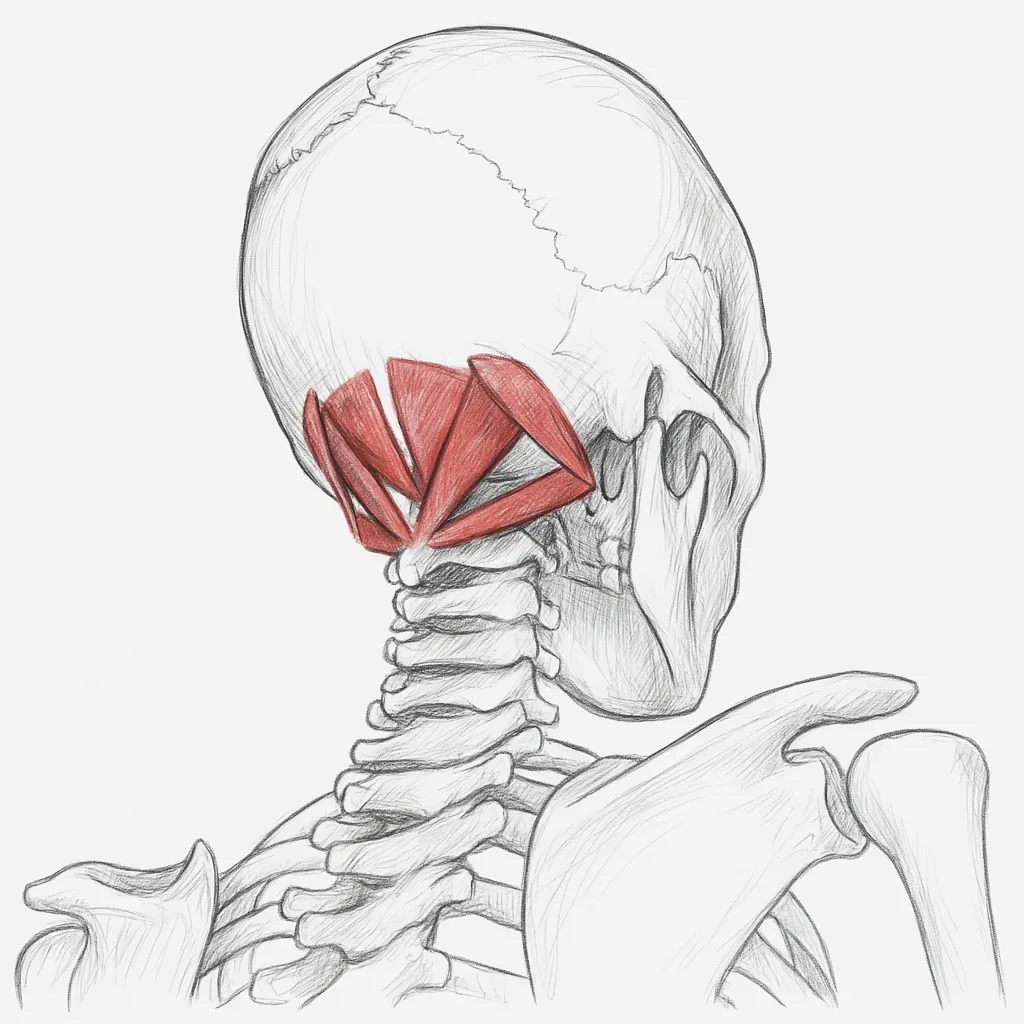
Part 2.8: Head & Neck — The Suboccipital Muscles
If you’ve ever felt a deep ache right at the base of your skull or a headache that seems to radiate from your neck up into your head, your suboccipital muscles are probably involved.
These small muscles are often overlooked, but they’re some of the biggest players when it comes to tension headaches, neck stiffness, and even dizziness or visual disturbances.
Where Are the Suboccipitals?
The suboccipital muscles sit deep underneath the back of your head, right where your skull meets the top of your neck. There are four on each side:
Rectus capitis posterior major
Rectus capitis posterior minor
Obliquus capitis superior
Obliquus capitis inferior
They’re tiny, but they connect your upper neck vertebrae to your skull, acting like fine-tuning stabilizers for your head.
What Do the Suboccipitals Do?
Fine head movements: These muscles help you tilt your head backward, rotate it slightly, and keep it steady during subtle movements.
Stabilize your head and neck: They constantly make micro-adjustments to balance your head on your spine.
Support your eyes: They’re functionally linked to your visual system — when you move your eyes, these muscles often adjust your head position automatically.
Referred Pain Patterns: What You Might Feel
Trigger points in the suboccipitals can cause a distinctive headache pattern that many people describe as a “band” or “vise” around the skull.
Common referred pain patterns include:
Base of the skull: Deep aching pain right where your neck meets your head.
Radiating over the top of the head: Pain that travels upward from the neck toward the forehead.
Behind the eyes: Some people feel pressure or a dull ache behind the eyes.
Dizziness or visual disturbances: Tight suboccipitals can compress nerves and affect balance.
How Do Trigger Points Form Here?
Forward head posture: Looking down at a phone or hunching over a screen puts constant strain on these muscles.
Eye strain: Because they’re linked to eye movements, excessive screen time can make them work overtime.
Stress: Clenching your jaw or tensing your neck when stressed can lock these muscles up.
Sleeping position: Poor pillow support or sleeping with your neck twisted can irritate them.
Signs to Watch For
Headaches that start at the base of your skull and wrap forward.
Neck stiffness that doesn’t improve with stretching larger neck muscles.
Light-headedness or trouble focusing your eyes.
Tenderness when pressing just under the back of your skull.
The Takeaway
The suboccipitals are tiny but mighty — and when they’re tight, they can trigger headaches, neck pain, and even dizziness that feel totally out of proportion to their size.
Simple fixes like improving posture, using a supportive pillow, and gently releasing these muscles with massage or stretching can help break the pain cycle.
Next Up
In Part 2.9, we’ll continue exploring the Head & Neck region with the splenius capitis and splenius cervicis — deeper muscles that stabilize your neck and upper back, and that often play a major role in neck pain and headaches.


