Why Your Low Back Pain Might Not Actually Start in Your Low Back
Low back pain is one of the most common complaints people deal with, and it’s easy to assume the problem is happening exactly where it hurts. But that isn’t always the case. In many situations, the pain you feel in your low back may actually be coming from surrounding muscles, movement patterns, or tension elsewhere in the body.
The body works as a connected system. When one area becomes tight, weak, overworked, or restricted, another area often has to compensate. That compensation can create strain in the low back even when the low back itself is not the true source of the problem.
For example, tight hips are a major contributor to low back discomfort. When the hip flexors, glutes, or deep hip muscles are restricted, they can change the way you stand, walk, bend, and sit. Over time, that altered movement pattern places more stress on the lumbar spine. The same is true for tight hamstrings, poor core stability, and even tension through the upper back and pelvis.
Trigger points can also refer pain into the low back. Muscles like the gluteus medius, quadratus lumborum, and piriformis can develop tight, irritated bands that create pain patterns people often mistake for a “bad back.” In some cases, the pain is less about structural damage and more about muscular dysfunction and compensation.
That’s why focusing only on the spot that hurts does not always lead to lasting relief. A more effective approach is to look at the bigger picture: how the hips move, how the muscles around the pelvis are functioning, where tension is accumulating, and what daily habits may be reinforcing the problem.
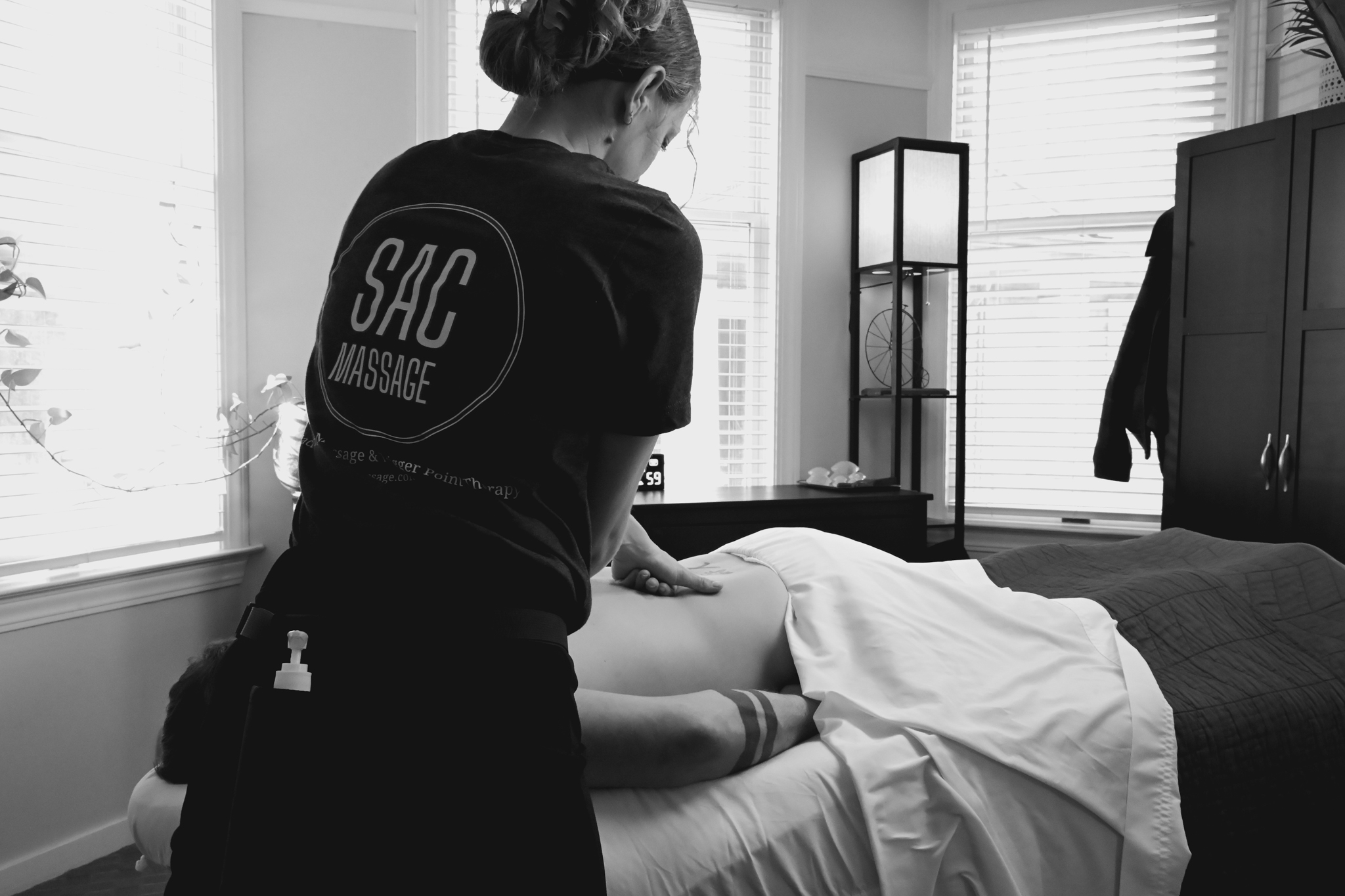
Massage therapy can help by identifying and addressing those contributing areas. Targeted bodywork can reduce tension, improve mobility, calm irritated muscles, and help restore more balanced movement patterns. When treatment looks beyond the low back itself, clients often get better results and longer-lasting relief.
If you’ve been dealing with low back pain, the answer may not be to chase the pain, it may be to find the real source behind it.


