Part 2.6: Head & Neck — The Digastric Muscle
If you’ve ever felt a persistent ache under your chin, pain that radiates to your throat, or even headaches that seem to defy logic, the digastric muscle might be worth your attention.
Though it’s small and often overlooked, this muscle can quietly contribute to jaw pain, swallowing discomfort, and tension that wraps up into the head.
Where Is the Digastric?
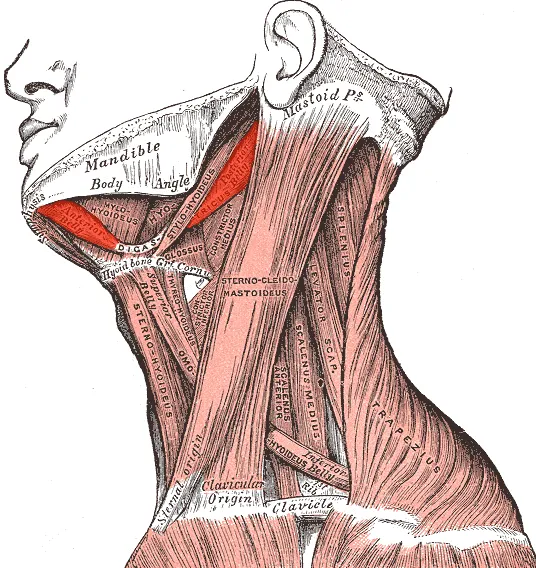
The digastric muscle is made up of two small muscle bellies — the anterior belly (at the front under the chin) and the posterior belly (which runs toward the back of the jaw and attaches near the mastoid process behind your ear). The two parts are connected by an intermediate tendon.
Think of it like a sling under your jaw that helps open your mouth and stabilize your hyoid bone (a small bone in your throat region).
What Does the Digastric Do?
Helps open the mouth: It works alongside the lateral pterygoid to depress the mandible, allowing you to open wide.
Elevates the hyoid bone: This action supports swallowing and speech.
Stabilizes the jaw and neck: It works in concert with other muscles to keep your head and neck balanced.
Referred Pain Patterns: Where It Shows Up
Trigger points in the digastric can create referred pain that’s surprisingly far-reaching:
Under the chin: You might feel tightness or tenderness when pressing under your jawline.
Throat discomfort: Pain can radiate toward the front of the neck, making swallowing feel awkward even if nothing is actually wrong with your throat.
Jaw and tooth pain: The anterior belly’s trigger points can mimic pain in the lower front teeth.
Ear area: The posterior belly can refer pain behind the ear or into the upper neck.
Headaches: Tension can travel upward, creating an ache behind the ear or at the base of the skull.
What Creates Digastric Trigger Points?
Chronic clenching: When your jaw muscles are overworked, the digastric tries to counteract that tension.
Forward head posture: A forward tilt strains the muscles that connect the head, jaw, and neck.
Swallowing habits: Frequent throat clearing, chewing gum, or bruxism can stress the digastric.
Mouth breathing or poor tongue posture: These subtle habits can keep the muscle slightly activated all day.
Signs to Watch For
Tenderness when pressing under your chin.
Difficulty fully opening your mouth without pain.
Unexplained “throat tightness” despite normal exams.
Persistent headaches that wrap up from the neck toward the back of the head.
The Takeaway
The digastric is small but significant — a hidden bridge between jaw tension, throat discomfort, and headaches. Because it’s deep and hard to reach, it often goes untreated when people only focus on surface muscles like the masseter.
Gently working on posture, stress reduction, and specific myofascial release techniques for the digastric can help relieve tension you didn’t even know was connected.
Next Up
In Part 2.7, we’ll continue the Head & Neck region by exploring the occipitofrontalis — the muscle that connects your forehead to the back of your skull and plays a surprising role in tension headaches and scalp tightness.


